
Hearing Loss Is For Life, Not Just For Awareness Days
- Aug 16, 2021
- 3 min read
I vividly remember receiving my diagnosis of profound sensorineural hearing loss at the age of 19, delivered by an overly enthusiastic specialist sporting a multicoloured polka dot bowtie. My immediate response was to ask whether I would one day go completely deaf. He responded light-heartedly, “We don’t know. Maybe!” His cheery tone felt inappropriate and insensitive considering this was a lifechanging piece of news.
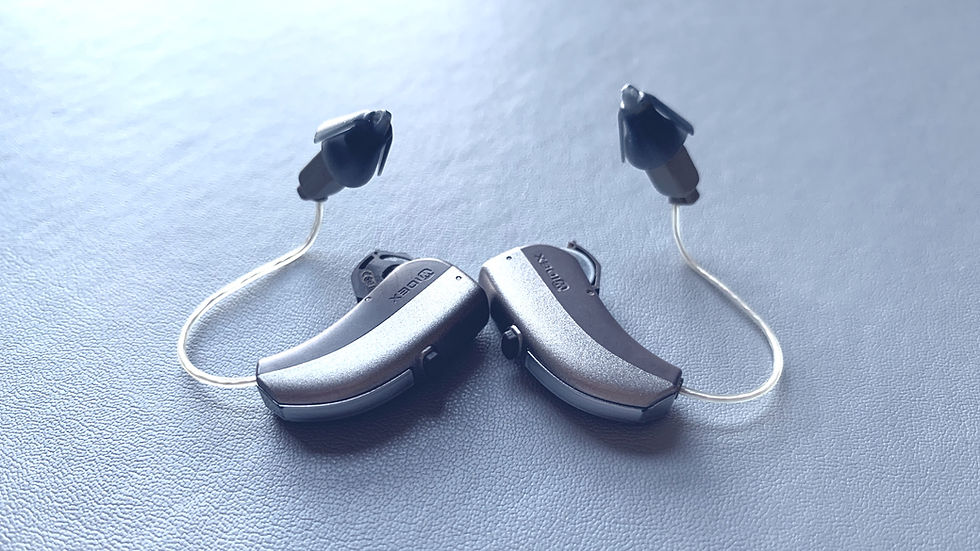
At this point, and for a good two to three years after, I functioned quite well in social situations even without the use of my hearing aids. To a point, I questioned whether a mistake had been made in the diagnosis of profound hearing loss. My decision not to wear my hearing aids for the first few years, however, wasn’t simply because I was functioning well but because I felt they separated me from my peers. There was an element of embarrassment on my part that I now regret nurturing, as hearing loss is something that should never be ashamed of. I didn’t feel overly isolated in social situations, though – this occurred later as my hearing deteriorated further. I noticed I was beginning to dread being introduced to new people at social functions, whereas I used to consider myself being a very gregarious, sociable individual. There were only so many times I felt I could ask people to repeat themselves (three times was my personal “max”) before my embarrassment became so overwhelming that I just had to hazard a best guess as to what had been said and respond accordingly. As someone who once thrived on social interaction, I felt increasingly like a shell of my former self. I resigned myself to sitting on the side lines, smiling and nodding along without any input in the conversation. Being unable to fully engage in conversations – both in personal and professional environments – became incredibly depressing, and I feared others perceived me as “strange” or aloof. Others were “in on the joke”, whereas I hadn’t even heard it in the first place. For me, this metaphor characterises hearing loss – an incredibly lonely place to be.
My hearing loss began to have a progressively negative impact on my mental health, to the point where I was experiencing symptoms of depression. I realised that for the sake of my wellbeing it was imperative to do more than simply accept my hearing loss – I needed to assume some control. I knew no one else who was deaf, which was exacerbating my feelings of loneliness. I decided to reach out to the deaf community, and began by following a Deaf advocate on Instagram who, after commenting on one of her posts, asked if I’d like to join a deaf awareness group. I was thrilled, and being part of a group with shared experiences has had a profoundly positive impact. I feel less lonely, knowing that others feel and experience the same barriers to communication as I do. She encouraged me to create a blog as a personal outlet and to advocate for hearing loss. Writing has been very cathartic for me, especially when others with hearing loss respond to say they experience the same feelings of isolation: using the telephone, for example, which may sound trivial to a hearing person but is actually incredibly isolating in the sense that it’s yet another form of communication that I cannot access.
I’m increasingly overcoming my feelings of loneliness as a result of being deaf, although this is an ongoing process and I still have my “dark days”. During these moments, I remind myself of my resilience and perseverance to succeed in a hearing world that more often than not seeks to exclude those like me. I surround myself with supportive people who appreciate my disability, adapt the way they communicate with me, and always ensure I’m included in social situations. I recognise now that people who dismiss me because of my hearing loss is a failure on their part, not mine.


Comments